Phone : +918050512505
ORAL HEALTH IN CARDIAC PATIENTS
ORAL HEALTH IN CARDIAC PATIENTS

Above illustration showing how bacteria in our oral cavity can spread to the heart causing cardiovascular complications
The relationship between oral health and cardiovascular disease represents one of the most significant yet overlooked health challenges in India.1 With 95% of the Indian population suffering from periodontal disease and cardiovascular diseases being a leading cause of death, understanding this connection could save millions of lives.(2,3,4)
Recent research reveals that patients with poor oral hygiene have increased risk of developing heart disease by up to 5-fold, while severe gum disease can elevate the cardiovascular risk by more than 11-fold.(5) This alarming connection comes from the oral bacteria entering the bloodstream and triggering systemic inflammation that directly damages the heart and blood vessels. (6)
UNDERSTANDING THE ORAL- CARDIAC CONNECTION

How does the oral bacteria affect your heart?
When you have gum disease, harmful bacteria like Porphyromonas gingivalis and Fusobacterium nucleatum can enter your bloodstream through bleeding gums (7,8). These bacteria then:
• Travel to the heart and attach to damaged heart valves (9)
• Trigger inflammatory responses that damage blood vessels (10)
• Increase blood clotting and promote atherosclerosis (11)
• Elevate inflammatory markers like C-reactive protein by 18-28% (12)
All these factors combined can significantly increase the risk of developing cardiovascular diseases, especially in individuals who already have existing heart conditions, making gum health an essential part of overall cardiac care.
DENTAL TREATMENTS AND PRECAUTIONS FOR CARDIAC PATIENTS
High-Risk Cardiac Conditions Requiring Special Care
Patients with the following conditions need antibiotic prophylaxis before certain dental procedures (13,14,15):
1. Artificial heart valves (mechanical or tissue) (16)
2. Previous history of infective endocarditis (17)
3. Heart transplant recipients with valve problems (18)
4. Unrepaired congenital heart disease (19)
5. Repaired congenital heart defects with residual defects (20)
Dental Procedures Requiring Antibiotic Prophylaxis

Adjustment of prosthetic devices
Note for Cardiac Patients:
This table applies specifically to high-risk cardiac patients as defined by current guidelines. Always consult with both your cardiologist and dentist before any dental procedure to determine the appropriate prophylaxis requirements for your specific cardiac condition.
ANTIBIOTIC PROPHYLAXIS GUIDELINES
Standard antibiotic regimens for cardiac patients (24,25):
Adults:
• Amoxicillin 2g orally, 30-60 minutes before procedure (26)
• Alternative for penicillin allergy: Azithromycin 500mg or Clindamycin 600mg (27)
Children:
• Amoxicillin 50mg/kg orally (28)
• Alternative: Azithromycin or Clarithromycin 15mg/kg (29)
PRE-TREATMENT PRECAUTIONS
Before any dental treatment, cardiac patients should (30,31):
1. Consult with their cardiologist and obtain medical clearance
2. Provide complete medication list including blood thinners
3. Monitor blood pressure before, during, and after treatment
4. Avoid elective dental care within 30 days of heart attack (32)
5. Schedule morning appointments to reduce stress
6. Bring cardiac medications (especially nitroglycerin) to appointments
DAILY ORAL HYGIENE FOR CARDIAC PATIENTS
Essential daily practices (33) :
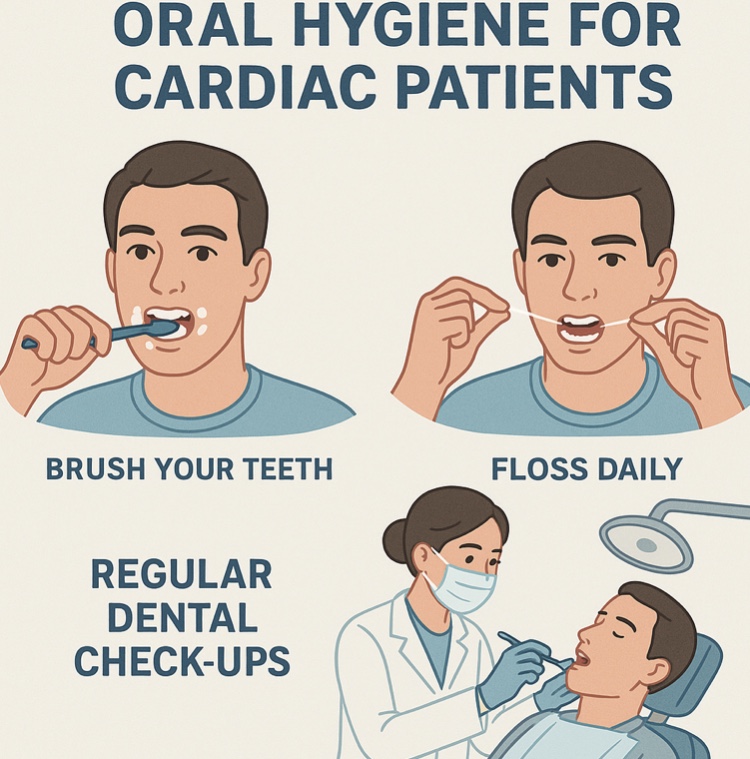
1. Brush twice daily with soft-bristled toothbrush and fluoride toothpaste
2. Floss daily to remove bacteria between teeth
3. Use antimicrobial mouthwash to reduce bacterial load
4. Replace toothbrush every 3 months or after illness
5. Stay hydrated to maintain saliva production

PROFESSIONAL DENTAL CARE
Regular dental visits should include (34,35) :
• Professional cleaning every 3-6 months
• Comprehensive oral examinations
• Early detection and treatment of gum disease
• Coordination with cardiac care team
• Updated medical history at each visit
LIFESTYLE MODIFICATIONS
Heart-healthy oral habits (36):
• Quit tobacco use (increases both oral and cardiac risk)
• Limit sugary foods and drinks
• Maintain a balanced diet rich in fruits and vegetables
• Manage diabetes if present
• Control stress through relaxation techniques
CONCLUSION
The science is clear — oral health has a direct and critical impact on heart health. For patients with heart conditions, dental care is not just about comfort or appearance, but about reducing lifethreatening risks. A patientcentered, multidisciplinary approach involving dentists, cardiologists, and other healthcare providers ensures that every aspect of your treatment is safe, coordinated, and tailored to your medical needs.
At Smile Rehab Dental Clinics, we understand the unique challenges cardiac patients face. That’s why we work handinhand with your cardiology team, following the latest international antibiotic prophylaxis guidelines, performing pretreatment medical clearances, and ensuring gentle, stressfree dental care. Our specialized protocols, advanced sterilization, and patientcomfort measures mean you’re protected at every step — from your first checkup to advanced treatment.
For us, it’s not just about treating teeth — it’s about protecting lives. At Smile Rehab, we restore smiles, protect hearts, and give you the confidence that your oral and cardiac health are in the best hands.
Because when your mouth is healthy, your heart is happier.

Dr. SURABI SASI
CHIEF DENTAL SURGEON
SMILE REHAB DENTAL CLINICS
Tag
ORAL HEALTH IN CARDIAC PATIENTSDENTIST IN SAHAKARNAGARDENTAL CLINIC NEAR MEEnquiry
Get in touch







The SMILE REHAB.All Rights Reserved © 2026


.png)